Esports Is Getting National Teams: Why the Esports Nations Cup Matters
Esports Nations Cup 2026 (ENC) is a national-team esports tournament where countries and territories compete against each other — not club organizations.
The first edition runs November 2–29, 2026 in Riyadh, Saudi Arabia, under the Esports World Cup Foundation (EWCF), and features 16 games.
Unlike org-led events with mixed-nationality rosters, ENC uses eligibility-based national lineups, with qualification and selection rules that vary by title. It matters because it’s a serious attempt to give esports a World Cup-style identity — without breaking publisher calendars or club contracts.
16 Games, One Legacy - Esports Nations Cup 2026
What Is the Esports Nations Cup 2026, and How Is It Different From the Esports World Cup?
The Esports Nations Cup 2026 is a national-team esports tournament to be held in Riyadh, Saudi Arabia, from November 2–29, 2026. It will feature national teams across 16 titles and is planned as a biennial event. Its qualification model includes rankings, regional qualifiers, and wildcard slots, depending on the game.
Both events sit under the Esports World Cup Foundation (EWCF), a Riyadh-based non-profit that runs the annual Esports World Cup (EWC) and the biennial Esports Nations Cup (ENC). The easiest way to separate them is this: EWC is about clubs, while ENC is about countries.
At the Esports World Cup, the main identity is the organization. Fans watch teams such as Falcons, Gen.G, NAVI, G2, Liquid, and other clubs compete. Those rosters may include players from several countries, but the brand is the center of the story.
At the Esports Nations Cup, the identity changes. Players represent countries and territories. The question becomes which countries and territories can assemble competitive national rosters across different games?
ENC does not replace club esports. Players still have regular teams, contracts, and competitive calendars. ENC gives those players another stage: they can keep their club careers, but also represent their country for this event.
ENC 2026 Format, Qualification, and Prize Pool
For the practical details, ENC is not one single bracket. Each game will have its own format, but the event still follows a shared idea for qualification and prize money.
ENC says qualification will come through a mix of rankings, regional qualifiers, and wildcard spots. It also projects 100,000+ qualifier participants across 100 nations and territories through hundreds of qualification events in 2026.
The money is also a big part of the pitch. ENC has a $45 million funding commitment, including a $20 million prize pool for players and coaches across the 16 games, with published examples like $50,000 per player for first, $30,000 for second, and $15,000 for third.
For now, many specifics remain game-by-game rather than universal, and organizers say more details will be released. For EA titles (Apex Legends and EA SPORTS FC), team selection is stated to come via EA-run qualifiers or direct invitations, not through ENC National Team Partners.
Why Esports Has Been Built Around Clubs, Not Countries
Esports didn’t grow through national federations the way football or basketball did. Most games built their competitive ladder inside the title itself: publisher-led leagues and international events for League of Legends and VALORANT, Valve’s open ecosystem around Counter-Strike 2 and Dota 2, and publisher-shaped circuits in games like Apex Legends and Rainbow Six Siege.
Ownership is the structural difference. No single company “owns” football, but esports titles are owned products — and that ownership comes with control over rules, formats, and official calendars. Riot, Valve, EA, and Ubisoft aren’t just stakeholders; they define what “official competition” looks like for their games.
That’s why esports competition has historically been organized around clubs and circuits, not national teams. Each title has its own ranking logic, regional structure, and qualification pathway, so a country-vs-country event can’t operate like FIFA or the Olympics — it has to plug into multiple ecosystems at once.
Clubs sit at the center of player careers, too. They pay salaries, hire coaches and analysts, run training, manage sponsorships, and lock in long-term schedules. A player may be Brazilian or Korean, but day-to-day they live inside an org system, not a national program. It makes ENC interesting. Esports was not really built around national teams, but this event is trying to see if that idea can work.
Counter-Strike 2 is a clear example of why most esports ecosystems stay club-driven instead of country-driven. Even at CS2’s highest level, teams are built by organizations, not national selectors — and the year-round competitive structure reinforces that model. To see how it works, start with the CS2 Majors (the closest thing to an official world championship), then look at the open tournament circuit run by third-party organizers like PGL, ESL, and BLAST.
Counter-Strike 2 Majors: Valve’s Official World Championship Tournaments
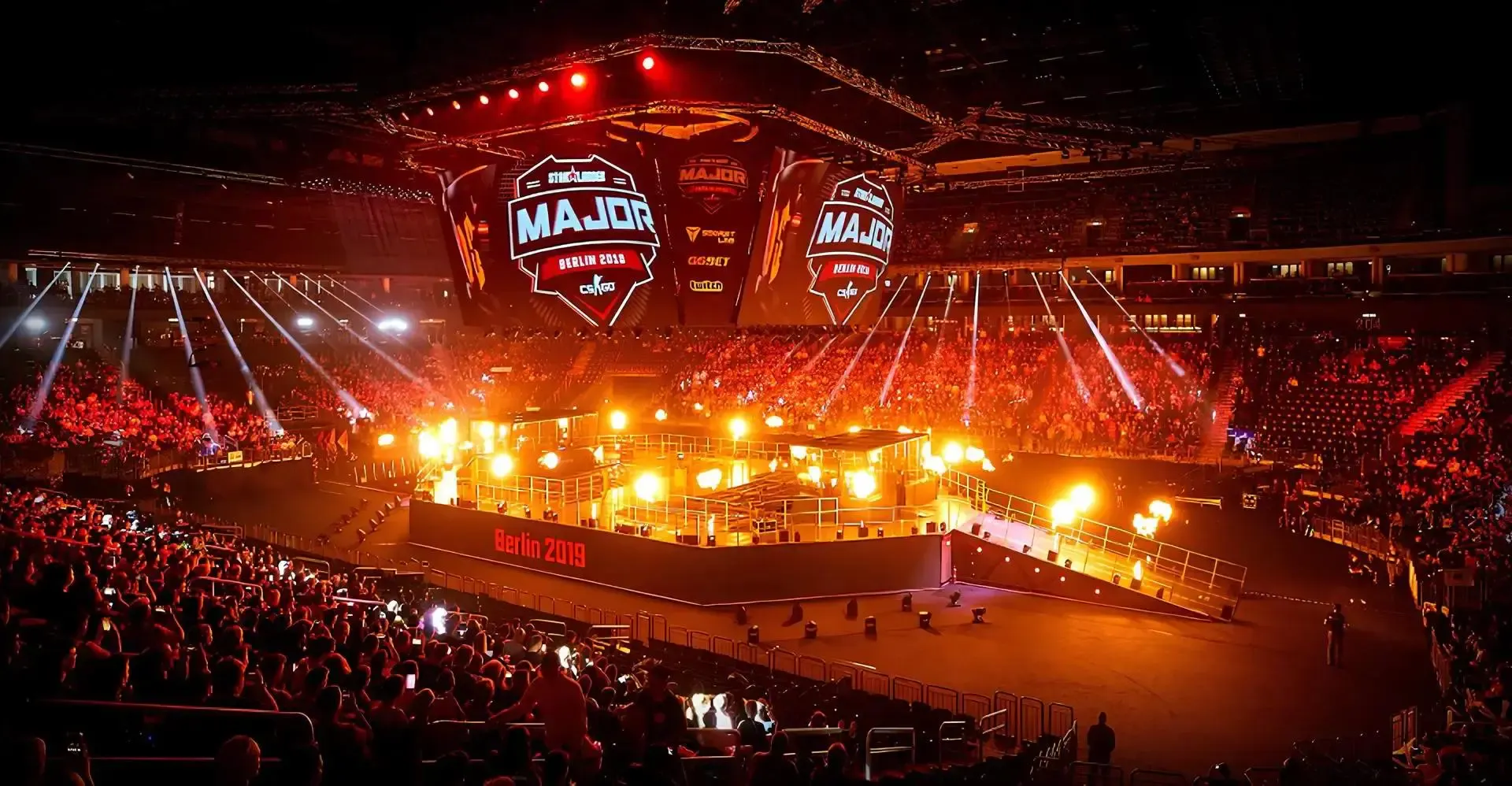
Source: sheepesports.com
In Counter-Strike 2 esports, Major tournaments are the most prestigious events in the competitive calendar. Organized with support from Valve, CS2 Majors function as the game’s official world championships, featuring the best teams from around the world.
However, even at this level, teams are not built around national identity. CS2 Major rosters are formed by organizations, often combining players from different countries based on skill, roles, and team chemistry. Winning a CS2 Major reflects the strength of a club system — not a nation.
CS2’s club-first identity also extends beyond tournaments into the game’s surrounding economy. Because teams are organizations and players are part of a global talent market, the skins ecosystem becomes a year-round layer of fan engagement — with third-party marketplaces like CS.MONEY existing alongside the competitive circuit.
PGL and CS2 Tournaments: How the Open Esports Ecosystem Works
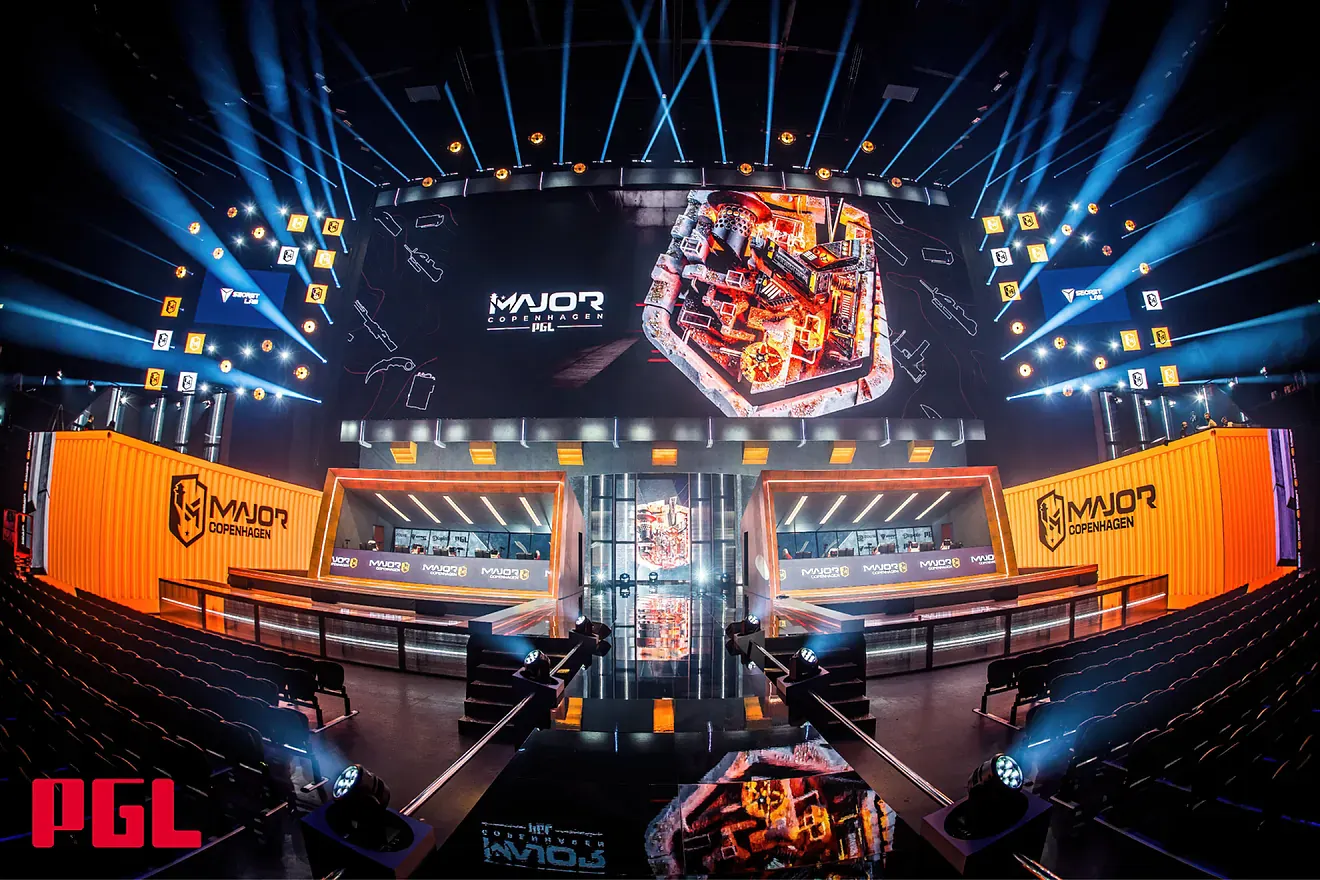
Source: x.com/pglesports/status/1773046677877735909
In addition to Majors, Counter-Strike 2 tournaments are also run by third-party organizers such as PGL. These events are part of the broader CS2 esports ecosystem, where multiple tournament operators host competitions throughout the year.
This open circuit structure shows how CS2 esports developed around clubs rather than national teams. Professional organizations compete across different tournaments, maintain long-term rosters, and operate in a global talent market — without representing specific countries.
Which Games Are Included in the Esports Nations Cup 2026?
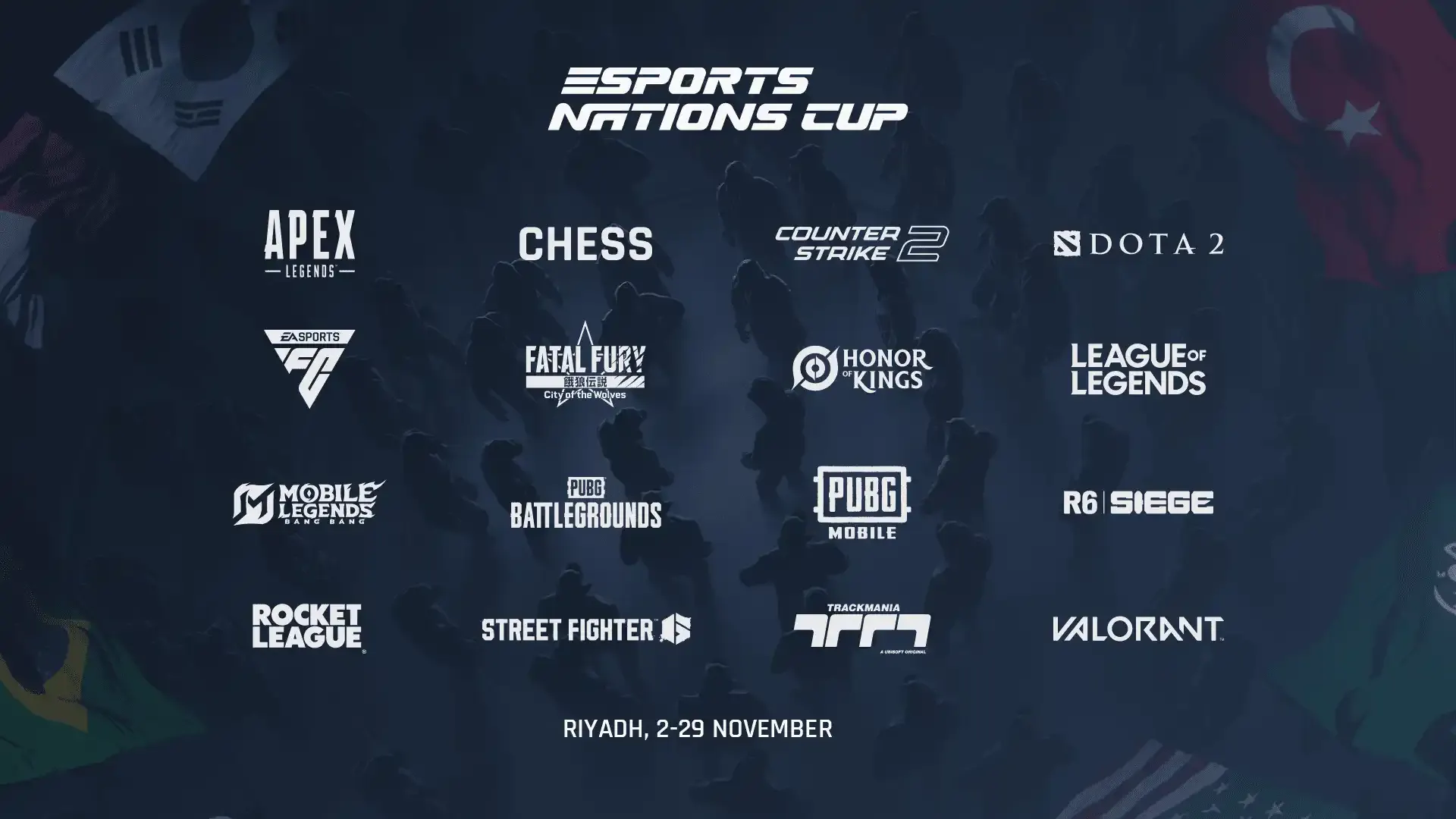
Source: esportsnationscup.com
The Esports Nations Cup 2026 lineup spans seven genres:
- Tactical shooters: Counter-Strike 2, Tom Clancy’s Rainbow Six Siege, VALORANT
- Battle royale shooters: Apex Legends, PUBG: Battlegrounds, PUBG MOBILE
- MOBAs: Dota 2, League of Legends, Honor of Kings, Mobile Legends: Bang Bang
- Fighting games: Street Fighter 6, Fatal Fury
- Sports: EA SPORTS FC, Rocket League
- Racing: Trackmania
- Strategy/board: Chess
The lineup matters because ENC is not targeting only one type of esports audience. It includes tactical shooters, MOBAs, battle royale games, mobile titles, fighting games, sports games, racing, and Chess.
That variety gives the tournament reach. Different games dominate different regions and platforms. Mobile Legends and PUBG MOBILE speak to mobile-first markets. CS2, Dota 2, League of Legends, and VALORANT bring major PC esports audiences. Fighting games and Chess add different competitive cultures.
The lineup also includes two of the biggest PC esports titles in the world: Dota 2 and League of Legends. ENC separately confirmed Dota 2 and League of Legends through dedicated game-lineup announcements, strengthening the tournament’s MOBA presence and giving the event access to two long-established global competitive communities.
This makes the event broader, but also harder to explain. A football World Cup has one sport and one trophy. ENC has many games, formats, and communities. The wide lineup helps ENC reach more fans, but it also makes the whole thing harder to explain as one tournament.
How Esports National Teams Work and Why Fans May Care
The national team format gives fans a simpler emotional entry point.
Club esports can be difficult for casual viewers. A fan may not know what G2, NAVI, Gen.G, or Team Liquid represents. They may not know the roster history, regional background, or rivalry. Many teams also have international lineups, which makes identity less obvious.
Countries are easier to understand. A flag is immediate. National rivalries already make sense. A viewer may not know why one esports organization matters more than another, but they can quickly understand France vs Brazil, Korea vs China, or Israel vs Germany.
That is the opportunity for ENC. It gives fans a reason to care before they know every player. You do not have to choose a favorite team at the Esports Nations Cup; you may already have one.
Players do not need to leave their clubs to join a national team. They can stay under contract with their regular organization and temporarily represent their country. For example, Brazilian players from different international clubs could form Team Brazil. They would not need to play for Brazilian clubs. They would simply need to be eligible to represent Brazil.
ENC should be viewed as an additional international format rather than a replacement for club competition.
The Biggest Challenges Facing National Teams
The idea is easy for fans to understand. Making it work for players, teams, and publishers is the harder part. For national teams, three issues will matter most: picking the right players, giving them enough time to practice, and fitting the event into an already packed esports calendar.
Selection legitimacy: Who actually decides the roster, and by what standard? Rankings help, but they rarely solve role balance or chemistry. A country can have elite talent and still end up with the “wrong” five players for a coherent team, which is how controversies start before the first match.
Limited prep time: Club teams build trust and systems over months. National rosters often get a short window to align on communication habits, roles, and strategy — especially when players come from different teams with different playstyles.
Calendar pressure: Players already juggle leagues, playoffs, Majors, qualifiers, travel, media work, and sponsor obligations. If ENC forces tough scheduling choices or increases burnout risk, clubs (who pay the salaries) have real incentives to resist.
ENC will not be judged only by its size or prize money. It will also be judged by whether the roster rules, schedules, and qualification systems feel fair.
Why Publishers Are the Key to the Esports Nations Cup
Publisher involvement matters because esports isn’t one sport — it’s a set of publisher-run competitive systems. If Riot changes VALORANT’s circuit rules or Valve shifts how CS2 events are sanctioned, every “national team” plan has to adapt.
That’s why ENC can’t operate like a traditional World Cup organizer. Publishers effectively decide what’s allowed: eligibility rules, competitive formats, broadcast permissions, and integrity tooling (like anti-cheat). Without that alignment, a national-team event risks feeling unofficial — even if the production is huge.
ENC’s own materials emphasize that the event is being developed with game partners and publishers, who help shape qualification systems, rankings, and formats. This is one of the clearest differences from traditional sports: football has no publisher, but League of Legends, VALORANT, and Apex Legends do.
Could the Esports Nations Cup Become the World Cup of Esports?
ENC already has many of the pieces it needs: national teams, qualifiers, strong funding, and support from publishers. Its long-term status will depend on whether repeated editions create history, rivalries, and player prestige.
The World Cup matters because it has history. It has decades of national memory, rivalries, heartbreak, heroes, and cultural weight. ENC does not have that yet. Right now, it has the basic structure. What it still needs is history.
The first edition will get attention because of the scale, but the real test comes after that. If the same countries invest in roster pipelines, if qualifying becomes a consistent pathway instead of a one-off invite system, and if publishers keep integrating ENC into official circuits, it starts to look like a real institution. If those signals don’t show up, it’s more likely to stay a spectacle than become a tradition.
The important question is whether the event becomes meaningful beyond the money. If players want to win it, fans remember it, publishers protect its place in the calendar, and countries take roster-building seriously, ENC could grow into something important. If not, it may remain large without becoming historic.
What the Esports Nations Cup Could Mean for the Future of Esports
If ENC works, its impact could go beyond one tournament.
It could encourage more countries to build esports structures, create qualifiers, identify talent, support coaches, and develop regional scenes. It could also make esports easier for governments, federations, and mainstream brands to understand. National teams are easy for people to understand: flags, regions, and country-vs-country competition.
Still, ENC probably will not replace club esports. Clubs will remain the core of most professional ecosystems. That is where players spend most of the year, where organizations invest money, and where publishers already have established circuits.
The more likely future is that both systems exist together. Clubs will still carry most of the season, while national teams appear for bigger international moments.
That is why the Esports Nations Cup matters. It matters because it asks a bigger question: can national teams become a real part of esports, or will they stay a side story?